Intuition, resilience and the language of colour
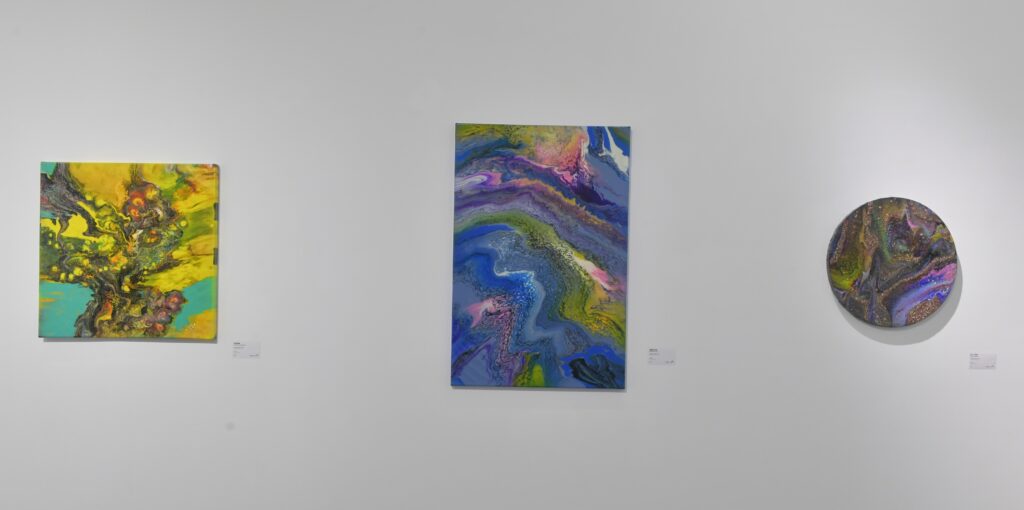
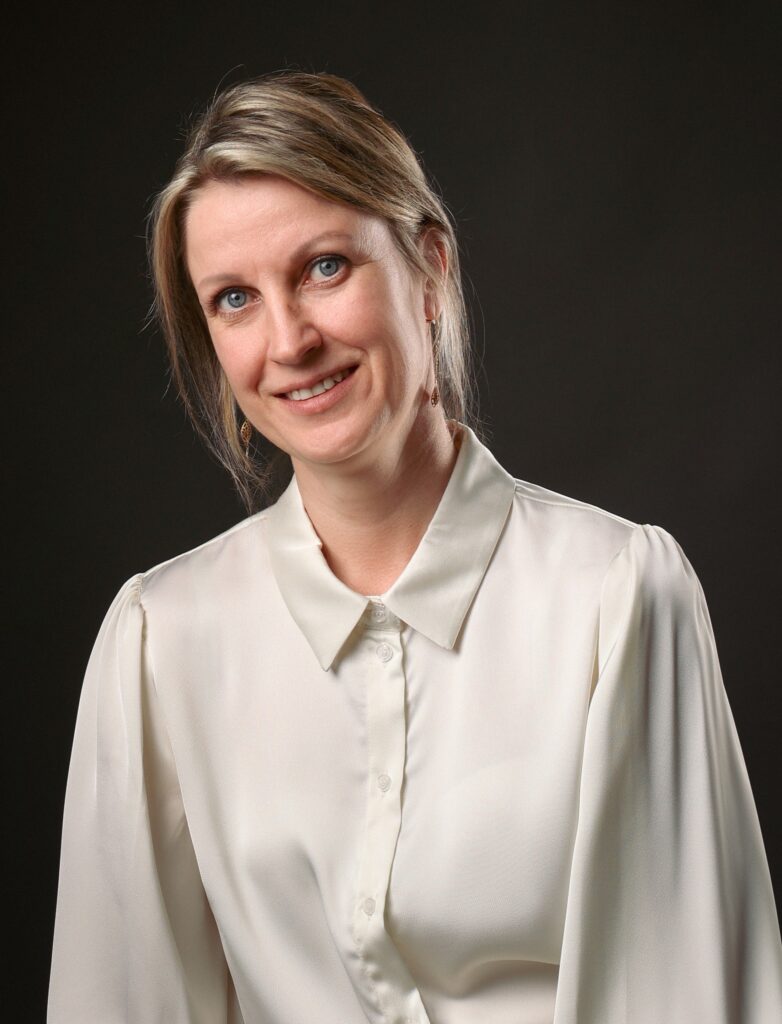
Born in Kretinga and raised in Palanga on Lithuania’s Baltic coast, Edita Abrink has lived in Sweden since 2010. A self-taught painter, she began making art in late 2022 and soon found her expressive language in fluid acrylics and mixed media. Her layered, dynamic abstractions explore memory, transformation and human connection, guided by a simple conviction: the most precious things in life are health, love and time.
Fine Art Magazine: Did you always want to become an artist?
Edita Abrink: At school, I admired classmates who painted beautifully. I wanted to do the same, but I struggled to express myself through art. The desire never completely disappeared; it remained a quiet dream as I continued my studies, worked and started a family. For many years, everyday responsibilities took priority, and I did not yet find my way into art. Looking back, I realise that although I did not begin painting seriously until much later in life, the desire to create had been with me since childhood.
Fine Art Magazine: What finally brought you to painting?
Edita Abrink: I moved to Sweden in 2010, after years of long working days in Lithuania. Starting over in a new country was not easy. Later, while our family was living in Spain, we went through a difficult period. When we returned to Sweden, I felt exhausted and carried many emotions that I struggled to put into words. Painting gradually became a way for me to process those feelings and express what words could not convey. Through the act of creating, I began to discover a form of expression that allowed me to give shape to my inner experiences.
Fine Art Magazine: How did you discover fluid art?
Edita Abrink: I first experimented with painting nature toward the end of 2022. In January 2023, I began exploring fluid art after watching other artists online. I studied the materials they used, mixed my own paints and experimented with different consistencies. Through this process of trial and discovery, I gradually developed my own way of working and began to find a visual language that felt natural to me.
Fine Art Magazine: Has having no formal art training shaped that freedom?
Edita Abrink: Yes. I do not feel bound by rules about what a painting should be. I can explore unfamiliar approaches and allow the process to reveal possibilities I may not have anticipated. I am not afraid of unexpected results. Even a painting that another artist might abandon can become something meaningful if I remain open to it and allow the work to guide me.
Fine Art Magazine: What happens when you begin a canvas?
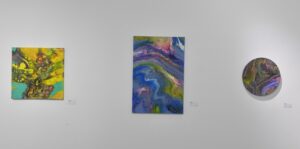
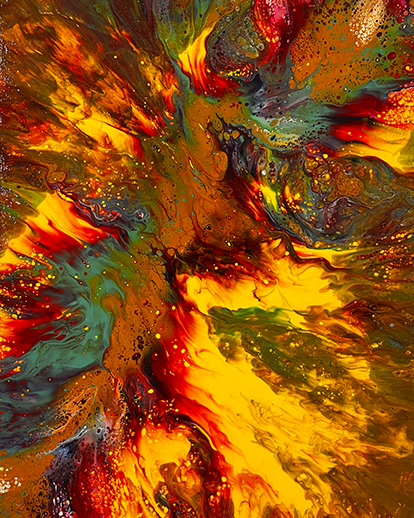
Edita Abrink: I often begin with a white or black acrylic base, then pour the colours in circles or lines. When I use a cell activator, it creates intricate patterns within the paint. I then tilt the canvas, allowing the colours to flow, interact and develop in their own way. Although I guide the process, I value the freedom to let intuition lead me rather than trying to control every detail. My creative process comes from within, and I follow that inner feeling as the work evolves. Even knowing when a painting is complete is intuitive; there comes a moment when I simply feel that it has reached its natural conclusion. It is difficult to explain this feeling in words, but it is an essential part of how I create.
Fine Art Magazine: Why do you sometimes add resin or other materials?
Edita Abrink: After the acrylic has dried, I return to the painting and look at it again. Sometimes the work is already complete; at other times, I feel it needs something more. I may add modelling paste, crushed glass or epoxy resin, depending on what the work calls for. Resin can enhance the colours and bring out details that were less visible before. I do not follow a fixed formula. Each work develops in its own way, and I rely on my intuition to recognise what it needs — and when it is complete.
Fine Art Magazine: You call your paintings “emotional landscapes.” What do you mean?
Edita Abrink: My paintings are not illustrations of particular stories. They hold feelings, memories, transformation and movement. My creative process begins within me, often with something that is difficult to express in words. Through colour, form and texture, these inner impulses gradually take shape. I want people who encounter my work to discover a connection of their own, rather than being guided towards a single interpretation. A colour or form may awaken a childhood memory in one person and evoke an entirely different feeling in another. For me, this openness is an essential part of art: each person brings their own experiences, emotions and perspective to the encounter.
Fine Art Magazine: Have viewers surprised you with their interpretations?
Edita Abrink: At an exhibition in Stockholm, a man told me that my paintings reminded him of music. He explained that when you first hear a song, you may notice only the sounds, but the longer you listen, the more emotions begin to emerge. He experienced my paintings in the same way: the longer he looked, the more he felt. I was deeply touched by this comparison because it expressed something meaningful about how I hope people will experience my art. I want my paintings to invite people to pause and spend time with them, allowing feelings and personal interpretations to unfold gradually.
Fine Art Magazine: What is the message you most want your work to carry?
Edita Abrink: Health, love and time. These are the values at the heart of my life and my artistic philosophy. We often hurry through life, believing that there will always be more time to do the things that matter, to express our love or to appreciate what we have. Yet time keeps moving, reminding us that every moment is precious. Health, love and time cannot simply be bought or replaced. They shape our lives in ways we sometimes understand only when we stop and reflect. My artistic voice is a reminder to slow down, listen to what we feel and recognise what truly matters. Through my paintings, I hope to create a moment of reflection, allowing people to connect with their own emotions and experiences. For me, art is not only about what we see, but also about what we feel within ourselves. If my work encourages someone to pause and appreciate life, love and the time we have, then it has expressed something deeply meaningful to me.
Selected exhibitions
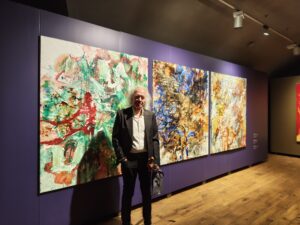
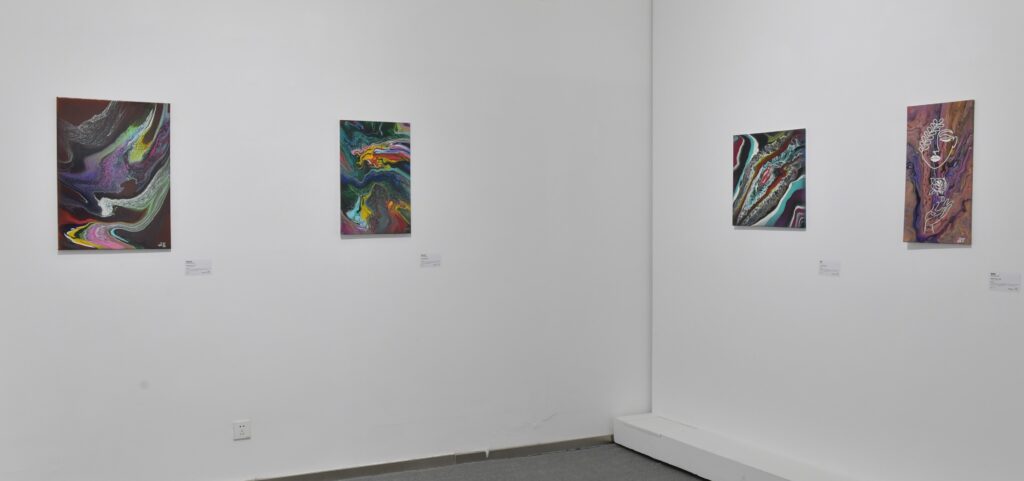
Pashmin Art has played a significant role in advancing Edita Abrink’s international artistic career, organizing and presenting a series of prestigious exhibitions that have introduced her work to audiences across Europe and Asia. Among these are exhibitions at the Hong Art Museum in Chongqing, China (2023–24 and 2025–26), and Museen der Schloss- und Residenzstadt Greiz in Germany (2024–25). Her collaboration with Pashmin Art also includes “Feminine Power on Canvas VI” at Pashmin Art Gallery in Hamburg (2025). Beyond these projects, Abrink has participated in exhibitions at Museum Venanzo Crocetti in Rome (2023), World Art Dubai (2025), and Stockholm’s Konstsalong (2026). Continuing her successful collaboration with Pashmin Art, her works are currently on display at Kunsthaus Weiz, Austria, in “Cogitatio Artium – Where Thought Becomes Art” (25 September–7 November 2026).
Selected recognition and publications
Alongside her exhibition activity, Abrink received the Noble Art Award 2026 and was named a Winner of the Global Collectors Art Prize 2026. She has also been featured in the Investable Artists 2026 Online Directory and Top Investable Artists 2026 Art Book, as well as in interviews and publications by Contemporary Art Curator Magazine, Contemporary Art Collectors and INDACY Media Global Magazine.
The interview was conducted by Dr. Davood Khazaie (Literary Art Critic and International Curator).